
How Many Solar Panels Do I Need? Formula and Examples
By Ubaid Ullah
8 min read
Most people ask this question before they ask anything else about solar. The answer is not a guess. It comes from one division and one rounding step, and you can do both with the numbers on your own electricity bill.
Key takeaways
- Required system size in kW = annual usage in kWh / (peak sun hours x 365 x efficiency).
- Panels = round UP of (kW x 1000 / panel watts). The final system size is panels x panel watts / 1000.
- At 4.5 sun hours, 80% efficiency and 400 W panels, 10,500 kWh a year needs 7.99 kW, which rounds up to 20 panels and an 8.00 kW system.
- Peak sun hours move the answer a lot. The same 10,500 kWh needs 26 panels at 3.5 hours and 15 panels at 6 hours.
In this guide
Start with your yearly usage
Everything starts with how much electricity you use in a year, measured in kilowatt-hours (kWh). That figure is usually on your electricity bill. Use your own number rather than an average.
If you plan to change how much power you use, such as adding a large new appliance, adjust the figure yourself before you size the system. The calculator works with whatever number you type in.
The sizing formula
The method works backwards from what you use to the system that would produce it. There are four steps, and the first three use the same output estimate as the NREL PVWatts style: kW x peak sun hours x 365 x system efficiency.
- Required kW = annual usage in kWh / (peak sun hours x 365 x efficiency)
- Panels = round UP of (required kW x 1000 / panel watts)
- System kW = panels x panel watts / 1000
- Estimated output = system kW x peak sun hours x 365 x efficiency
The defaults we use are 4.5 peak sun hours, 80% overall efficiency and 400 W panels. A peak sun hour is one hour of sunlight at an intensity of 1,000 watts per square meter. Peak sun hours vary by location, roughly 3.5 to 7 hours a day in the US, so enter your own.
The panel count rounds up because you cannot install part of a panel. Rounding down would leave you slightly short. That is why the final system size can be a little larger than the bare minimum.
Worked example: 10,500 kWh a year
Take a household that uses 10,500 kWh a year, with the defaults above.
- Divisor: 4.5 x 365 x 0.80 = 1,314 kWh per kW per year
- Required kW: 10,500 / 1,314 = 7.99 kW
- Panels: 7.99 x 1000 / 400 = 19.98, which rounds up to 20
- System size: 20 x 400 / 1000 = 8.00 kW
- Estimated output: 8.00 x 4.5 x 365 x 0.80 = 10,512 kWh
The system makes 10,512 kWh against 10,500 kWh of use. The extra 12 kWh is the cost of rounding up to a whole panel. At the placeholder price of 2.75 per watt, an 8 kW system comes to 22,000 before incentives. Replace that price with your own quote. We cover how the price is built in Solar Panel Cost Per Watt.
Three households side by side
Here is the same method applied to a small, a medium and a large yearly usage, all at the defaults.
| Annual usage (kWh) | Required kW | Panels | System kW | Estimated output (kWh) |
|---|---|---|---|---|
| 6,000 | 4.57 | 12 | 4.80 | 6,307 |
| 10,500 | 7.99 | 20 | 8.00 | 10,512 |
| 15,000 | 11.42 | 29 | 11.60 | 15,242 |
Notice how rounding behaves. The 6,000 kWh household needs 4.57 kW, or 11.4 panels, so it rounds up to 12 and ends with a 4.80 kW system. The 15,000 kWh household needs 28.5 panels and lands on 29. Rounding always lands at or just above the target, never below it.
How much one kilowatt makes in a year
A useful shortcut sits inside the formula. At the defaults, each kW of panels makes 4.5 x 365 x 0.80 = 1,314 kWh a year. One 400 W panel is 0.4 kW, so it makes 525.60 kWh a year.
You can use that number to check any quote. Divide your yearly usage by 1,314 and you have the required kW. Divide by 525.60 and you have the rough panel count before rounding. For 10,500 kWh, that is 10,500 / 525.60 = 19.98 panels, the same answer as before.
Sun hours can change the count
Peak sun hours are the biggest swing factor in the sizing formula. A sunnier location needs fewer panels for the same usage. Here is 10,500 kWh a year again, with only the sun hours changed.
| Peak sun hours | Required kW | Panels | System kW |
|---|---|---|---|
| 3.5 | 10.27 | 26 | 10.40 |
| 4.5 | 7.99 | 20 | 8.00 |
| 6.0 | 5.99 | 15 | 6.00 |
The difference between the two ends is 11 panels for the same house and the same bills. That is why using the default of 4.5 for your own roof can mislead you. Enter the value for your location. For the same reason, our guide to daily solar panel output shows what one panel makes at each sun-hour level.
What the answer leaves out
The result is a starting estimate. It does not know about shade, roof direction, tilt or local rules, all of which change real results. It uses one overall efficiency figure for all of them.
That efficiency figure matters. PVWatts’ default system losses are 14%, which is 86% efficiency. Our tools use 80% as a placeholder. If you ran the 10,500 kWh example at 86%, the required size would be 7.43 kW and the count 19 panels, a 7.60 kW system. A small change in efficiency can remove a panel.
Panels also lose about 0.5% of their output per year, and this sizing method does not apply that loss. To see how a slow decline affects savings over time, use the Solar Payback Calculator. All figures here are estimates, not financial, tax or engineering advice.
Frequently asked questions
How do I find my yearly electricity use?
Check your electricity bills. The annual kWh total is usually on the bill. Enter that number in kWh into the second mode of the calculator, and it works backwards to a required system size and a panel count. If your usage is likely to change, such as adding a large new appliance, adjust the number yourself.
Why does the panel count round up?
You cannot install part of a panel, and rounding down would leave the system a little short of your target. In our 10,500 kWh example the exact answer is 19.98 panels, so the calculator uses 20. The system size is then 20 x 400 / 1000 = 8.00 kW, slightly above the 7.99 kW required.
What if my peak sun hours are different?
Change the peak sun hours box. They vary by location, roughly 3.5 to 7 hours a day in the US, so use a value for your own area. With 10,500 kWh a year, 3.5 hours needs 26 panels and 6 hours needs 15, so this one input can move the answer by more than ten panels.
Is 80% efficiency right for my home?
It is a placeholder for overall system efficiency, not a measured value for your roof. PVWatts’ default system losses are 14%, which equals 86% efficiency. Shade, roof direction and tilt all change real results, so treat the panel count as a starting estimate and ask an installer to check your roof.
Size your own system. Choose the mode that sizes a system from your electricity use, then enter your own sun hours, panel wattage and price per watt.
Tools used in this guide
Related articles

How to Calculate Rafter Length: Formula, Factors and Examples
Read article: How to Calculate Rafter Length: Formula, Factors and ExamplesCalculate rafter length from rise and run, or from a pitch with a simple factor. Includes a factor table and worked examples.

How Many Bags of Concrete in a Cubic Yard? 40, 60 and 80 lb Bags
Read article: How Many Bags of Concrete in a Cubic Yard? 40, 60 and 80 lb BagsA cubic yard of concrete is about 90 bags of 40 lb, 60 bags of 60 lb or 45 bags of 80 lb. See…

How Much Concrete Do I Need for a Slab? A 10×10 Example
Read article: How Much Concrete Do I Need for a Slab? A 10×10 ExampleWork out how much concrete a slab needs, with a full 10 x 10 foot example in cubic feet, cubic yards and bags, plus…
About the author
Ubaid Ullah is a digital marketer and SEO specialist, and the independent creator of Zayvora Calculators. Results are estimates for information only. See the Disclaimer.
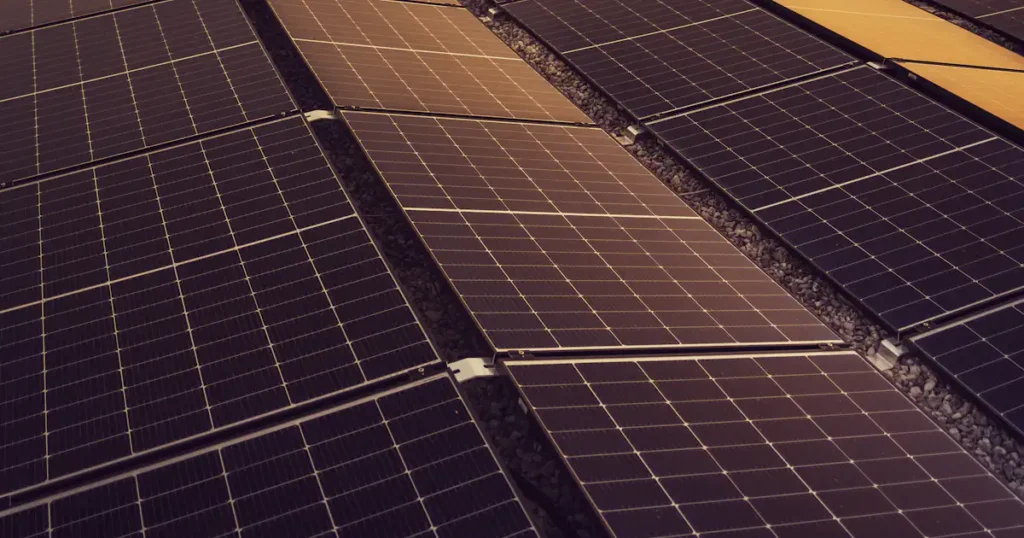
Photo: Michael Pointner on Unsplash