
Is Solar Worth It Without the Federal Tax Credit? A Payback Walkthrough
9 min read
Try it now: Solar Payback Calculator.
Key takeaways
- Payback = net cost / yearly savings. Yearly savings = production x electricity rate.
- The 30% federal residential credit (Section 25D) ended for systems installed after December 31, 2025, so net cost is the price you actually pay after whatever incentives you do get.
- For a 6 kW system costing 16,500, payback is 17.44 years at 0.12 per kWh, 12.31 years at 0.17 and 8.37 years at 0.25.
- The rate you pay for electricity is the biggest lever. Use the rate on your own bill.
In this guide
The question this guide answers
People ask whether solar is worth it, and they often mean something narrower: how long until it pays for itself? That has an arithmetic answer. Whether the answer is good enough is a personal decision that depends on your finances, your plans for the home and your tolerance for waiting.
So we do not tell anyone that solar is or is not worth it. We show a method, with numbers, that you can repeat with your own bill. The inputs are placeholders and the results are estimates.
Where the tax credit stands
The 30% federal residential solar tax credit (Section 25D) for homeowner-owned systems ended for systems installed after December 31, 2025. That is why the incentive default in our calculators is $0, and why the walkthrough below starts from the full cost.
State, utility and local incentives vary, so check your own and ask a tax professional. Leases and power purchase agreements work differently and are not covered here.
The payback method in two lines
- Yearly savings = yearly production in kWh x electricity rate per kWh
- Payback in years = net cost / yearly savings
Production comes from the NREL PVWatts-style estimate: kW x peak sun hours x 365 x system efficiency. The defaults are 4.5 peak sun hours and 80% efficiency. A 6 kW system therefore makes 6 x 4.5 x 365 x 0.80 = 7,884 kWh a year. The first scenarios below assume no degradation and no price increases, to keep the arithmetic plain.
Three electricity rates, one system
Take a 6 kW system that costs 16,500. Only the electricity rate changes between rows.
| Rate per kWh | Savings per year | Payback (years) | 25-year net savings |
|---|---|---|---|
| 0.12 | 946.08 | 17.44 | 7,152.00 |
| 0.17 | 1,340.28 | 12.31 | 17,007.00 |
| 0.25 | 1,971.00 | 8.37 | 32,775.00 |
Work through the middle row to see where the numbers come from. Savings: 7,884 x 0.17 = 1,340.28. Payback: 16,500 / 1,340.28 = 12.31 years. The 25-year total is 1,340.28 x 25 = 33,507, and subtracting the 16,500 cost leaves 17,007.
The top row, at 0.12, pays back in 17.44 years, and the 25-year net is 7,152. The bottom row, at 0.25, pays back in 8.37 years. Same panels, same sun, very different outcomes.
A larger system, with and without an incentive
Now an 8 kW system that costs 22,000, at 0.17 per kWh. Production is 8 x 4.5 x 365 x 0.80 = 10,512 kWh a year.
- Savings: 10,512 x 0.17 = 1,787.04 a year
- Payback at 22,000: 22,000 / 1,787.04 = 12.31 years
- With a 2,000 incentive, net cost 20,000: 20,000 / 1,787.04 = 11.19 years
The payback matches the 6 kW example at 12.31 years because both systems cost the same per watt and make the same energy per watt. Size changes the savings, not the payback. The incentive takes about 1.1 years off. To price your own system, see Solar Panel Cost Per Watt.
The rate is the biggest lever
Look back at the table. Moving the rate from 0.12 to 0.25 cut the payback from 17.44 years to 8.37 years without touching the system. Nothing else in the formula swings the result as hard, because the rate multiplies every kilowatt-hour the panels make.
That has a practical consequence. Do not use our 0.17 or anyone else’s average. Use the rate on your own bill, and run the calculation again if the rate changes. You can try it in the Solar Payback Calculator, where every input is editable.
What these estimates leave out
The walkthrough is deliberately simple. Several real-world items are missing, and each could move the answer.
- Financing costs. If you borrow to pay for the system, interest adds to the cost.
- A battery. Storage is a separate cost with its own benefits, and none of it appears here.
- Roof work. Repairs or replacement before installation raise the net cost.
- Price changes. Electricity prices may rise or fall. The scenarios above hold the rate flat.
- Selling power back. The method treats every kilowatt-hour as saving the same rate. Rules for exported power vary.
Panels also lose about 0.5% of their output per year, which the first scenarios ignore. The calculator can include degradation, price increases and maintenance, and the adjusted payback guide shows how. All figures are estimates, not financial, tax or engineering advice.
How to run this on your own bill
You can repeat the walkthrough in a few minutes. It takes three inputs and no special tools beyond a calculator.
- Get the net cost. Take a quote and subtract only the incentives you are sure you will receive. If you are unsure about an incentive, leave it out and treat it as a bonus.
- Estimate production. Multiply the system size in kW by your own peak sun hours, by 365, and by the efficiency. Do not rely on our 4.5 and 80%, which are placeholders.
- Apply your rate. Multiply the production by the price per kWh on your electricity bill, then divide the net cost by that yearly saving.
Then run it twice more, once with a rate a little lower and once a little higher. The spread between those three answers shows how sensitive your result is, in the same way the table above shows it for 0.12, 0.17 and 0.25. If the three payback times are close together, the rate matters less for you. If they are far apart, your decision leans heavily on one number, and that number deserves a closer look.
Finally, write down what the estimate leaves out. If you plan to borrow money, add that cost. If your roof needs work first, add that too. A payback figure is only as honest as the list of costs behind it.
Frequently asked questions
Is the federal solar tax credit still available?
The 30% federal residential solar tax credit (Section 25D) for homeowner-owned systems ended for systems installed after December 31, 2025. State, utility and local incentives vary, so check your own and ask a tax professional. Leases and power purchase agreements work differently and are not covered by this method.
How do I calculate solar payback?
Divide the net cost by the yearly savings. Yearly savings are the kWh your system makes times the rate you pay per kWh. For a 6 kW system costing 16,500 with savings of 1,340.28 a year, payback is 16,500 / 1,340.28 = 12.31 years.
Which input changes payback the most?
The electricity rate. For the same 6 kW system costing 16,500, payback is 17.44 years at 0.12 per kWh and 8.37 years at 0.25. Use the rate on your own bill, because an average from someone else can mislead you by years.
What do these estimates leave out?
They leave out financing costs, a battery, roof work, changes in electricity prices and rules for selling power back. Shade, roof direction and tilt also change real output. Treat the result as a way to compare scenarios, and ask for a detailed quote before you decide.
Run your own numbers. Enter your net cost, system size and the rate from your bill, and see the payback and 25-year net savings.
Tools used in this guide
Related articles
See all of our home tools on the Home and Energy Calculators page.
About the author
Ubaid Ullah is a digital marketer and SEO specialist, and the independent creator of Zayvora Calculators. Results are estimates for information only. See the Disclaimer.
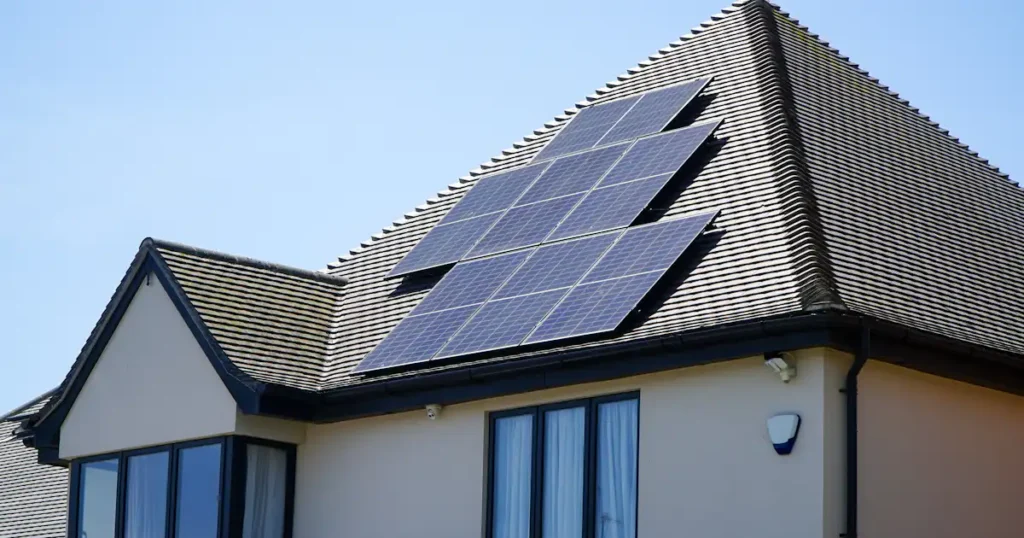
Photo: Watt A Lot on Unsplash